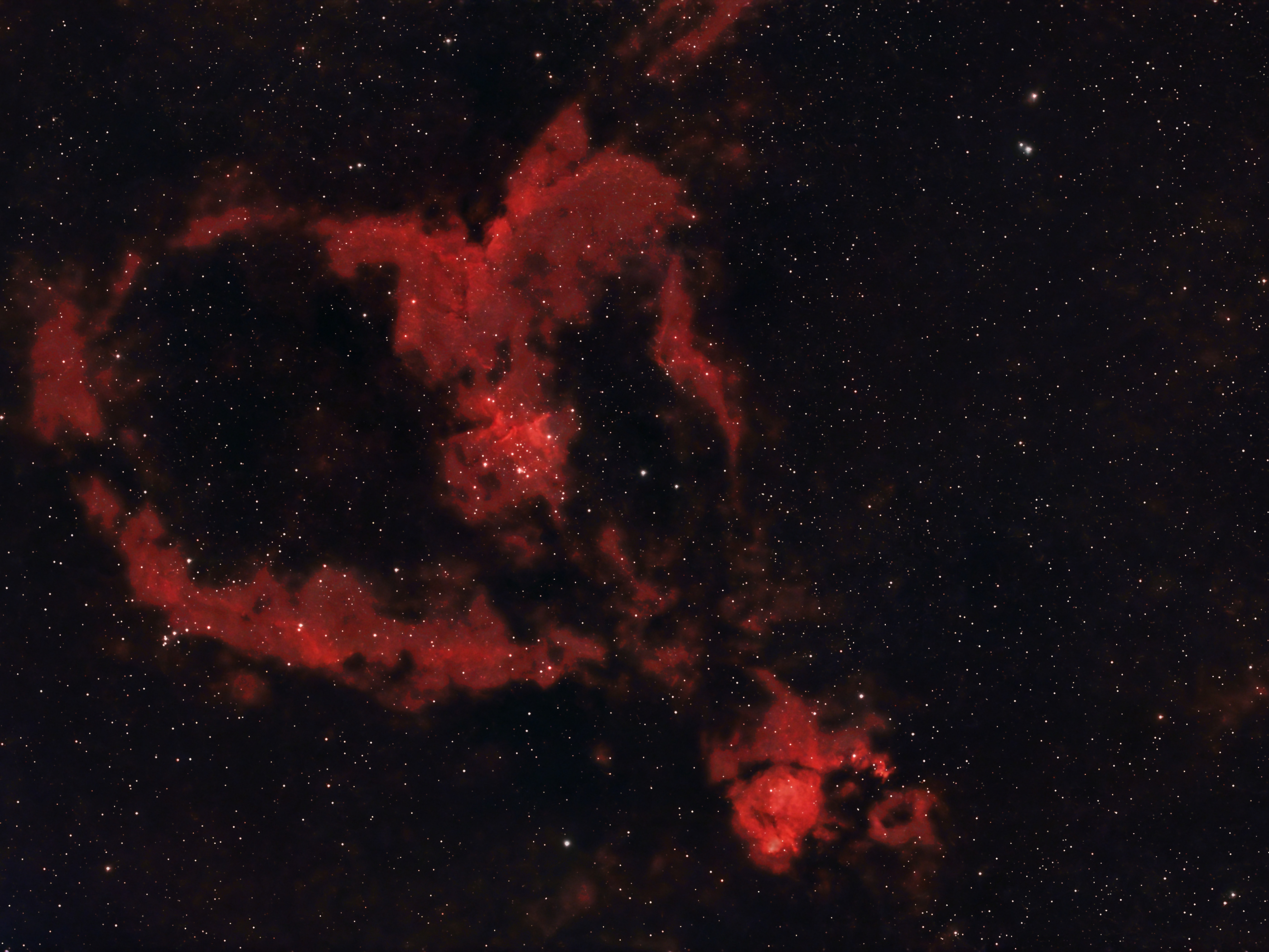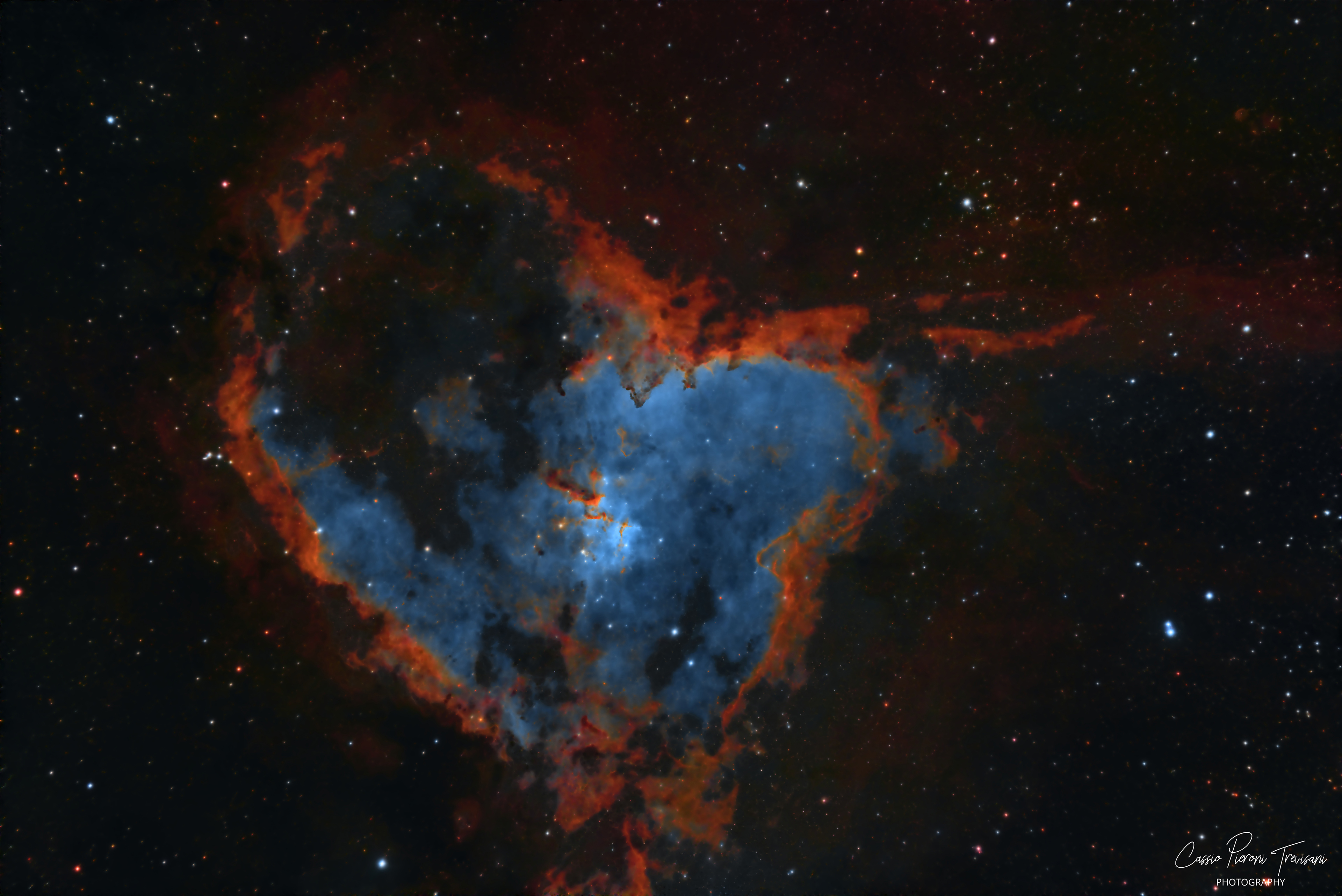
IC 1805 captured in narrowband SHO, emphasising the deep structure of its ionised core against a turbulent shell of hydrogen emission.
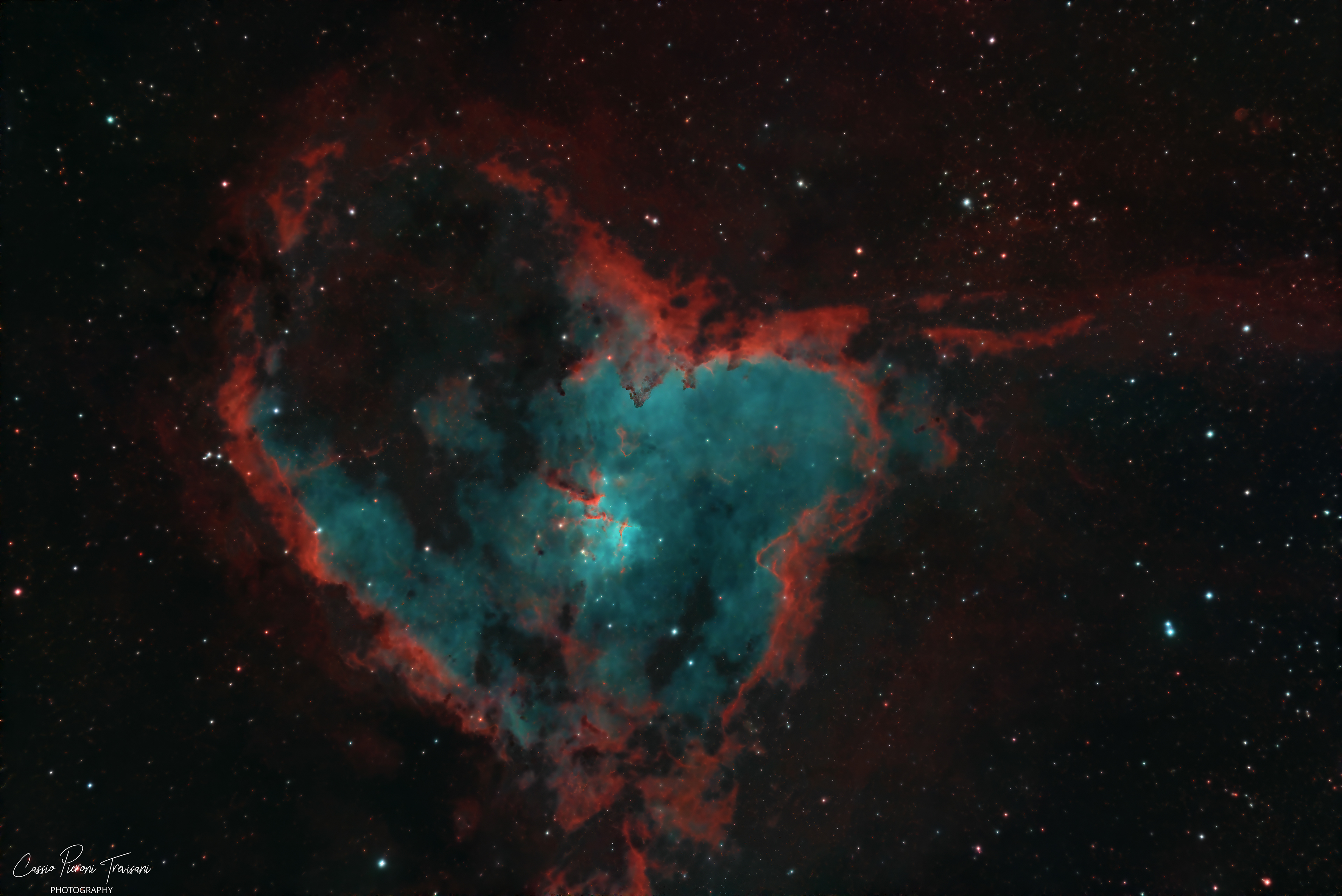
The Heart Nebula beating in oxygen light—its luminous core carved by the forces of newborn stars.

This image captures IC 1805, commonly known as the Heart Nebula, in the constellation Cassiopeia. Located about 7,500 light-years away, this vast emission nebula is a region of active star formation, sculpted by intense radiation and stellar winds from young, massive stars at its core. Captured using a narrowband SHO (Hubble) palette, the image highlights the complex structure of ionized gases: sulfur (SII), hydrogen (Ha), and oxygen (OIII). The vibrant teal core reveals strong oxygen emission, while the surrounding red filaments trace hydrogen-rich regions and shock fronts shaped by stellar feedback. The intricate network of pillars, cavities, and ionization fronts visible throughout the nebula reflects the ongoing interplay between gravity and radiation—where new stars are born even as existing ones reshape their environment. Processed to emphasize both large-scale structure and fine detail, this image aims to balance scientific representation with a natural aesthetic, preserving the depth and texture of this iconic deep-sky object.
IC 1805 captured in narrowband SHO, emphasising the deep structure of its ionised core against a turbulent shell of hydrogen emission.
The Heart Nebula beating in oxygen light—its luminous core carved by the forces of newborn stars.