A cosmic rose blooming nearly 5,000 light-years from Earth, Caldwell 49 reveals the delicate interplay between creation and destruction inside one of our galaxy’s most beautiful stellar nurseries. Young stars hidden within its core illuminate vast clouds of hydrogen, oxygen, and sulfur, sculpting glowing petals of gas and intricate dark dust lanes across the surrounding void.
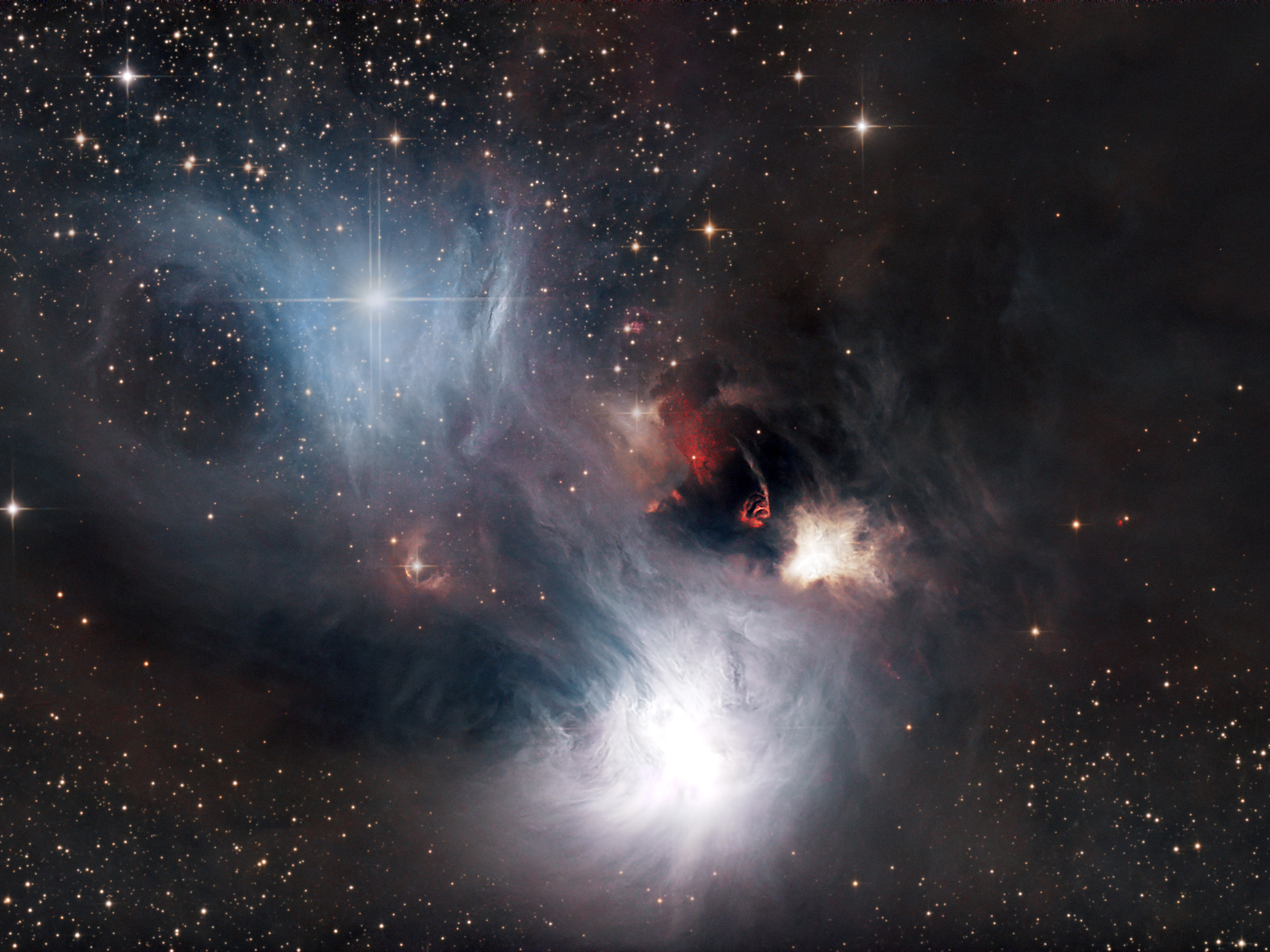
Bloom of a Stellar Nursery — Caldwell 49
Caldwell 49, better known as the Rosette Nebula, is a vast emission nebula located in the constellation Monoceros. At its heart lies a cluster of young, energetic stars whose intense radiation shapes and illuminates the surrounding clouds of gas, creating the layered structures and glowing formations visible throughout the nebula. This region of space is both violent and beautiful — a place where stellar winds carve through interstellar material while new generations of stars continue to emerge from the collapsing clouds around them. The soft oxygen-rich core contrasts against warmer hydrogen and sulfur regions, giving the nebula its characteristic flower-like appearance suspended against the darkness of space. Captured beneath the spring night sky with a limited imaging window, this image combines seven hours of narrowband data to reveal the delicate textures, faint outer nebulosity, and luminous inner structures that make Caldwell 49 one of the most iconic deep-sky objects in the night sky.
You may also like